Wrought Iron Gate Repair That Actually Lasts
- Alvaro Hernandez
- Feb 27
- 6 min read
A wrought iron gate usually gives you a few warnings before it quits. The latch starts needing a shoulder-check. The bottom corner drags a groove in the driveway. You see orange rust bleeding out of a joint that used to look tight and clean. None of that is “normal wear” you should ignore - it is the gate telling you where the next failure will be.
Wrought iron gate repair is one of those jobs where the right fix can buy you years, and the wrong fix can turn into a cycle of patching, scraping, and re-painting. The goal is not just to make it close today. The goal is to restore alignment, strength, and protection so it stays square through heat, rain, and daily use.
What’s really failing when a gate “goes bad”
Most gate problems trace back to a few physical issues: the gate is no longer square, the support system is no longer rigid, or corrosion has started breaking the steel down from the inside out.
Sagging is the big one. Gates sag because weight pulls on hinges and the post, and any flex over time shows up at the latch side. A heavy decorative panel acts like a long lever. If the post is moving even a little, or the hinge pins and welds are worn, the latch side drops first.
Rust is the slow failure that speeds up when it reaches seams. Paint can look fine from ten feet away while rust is expanding inside a tube, under a picket collar, or at the edge of a scroll where water sits. Rust doesn’t just discolor metal. It swells, pops coatings, and thins the steel until a joint cracks.
Then there’s impact damage and “forced” damage. A gate that’s been pushed open past its stop, clipped by a vehicle, or yanked when the latch was stuck can twist out of plane. One bend in the wrong spot can throw off the whole swing and make everything else wear faster.
The most common wrought iron gate repairs (and what causes them)
Hinge wear and hinge-side cracking
If the gate is hard to lift, hard to latch, or makes a grinding sound, start at the hinges. Hinge pins can wear into an oval shape, and welds around hinge barrels can crack from repeated stress. A quick “tighten the bolts” approach only works when the hinge is a bolt-on style and the post is solid. If the post is moving, tightening just hides the real issue.
A durable repair usually means restoring the hinge geometry: replacing worn pins or hinge components, re-welding cracked hinge plates, and making sure the hinge side is reinforced so the load transfers into something that won’t flex.
Sagging and misalignment at the latch
Sagging is not only a hinge problem. It can also be a frame problem. Older gates often have a simple rectangular frame. If internal bracing is minimal, the frame can rack slightly over time and never come fully back.
The right fix depends on what moved. Sometimes the post is out of plumb. Sometimes the gate frame is racked. Sometimes both are true, which is common after years of Central Texas soil movement and weather swings.
A lasting repair might involve re-squaring the gate, adding or upgrading diagonal bracing, adjusting hinges, and correcting latch placement so it closes smoothly without slamming.
Rusted sections, pinholes, and “soft” metal
Surface rust is manageable. Rust that has pitted the metal or created pinholes is a structural issue. Once the steel is thin, grinding and painting won’t bring strength back.
In those cases, the repair is fabrication work: cut out the compromised section, fit new steel, weld it properly, and re-coat it so the repair is protected, not just pretty. The tricky part is matching thickness and profile so the repaired area doesn’t become a weak spot right next to new, stronger steel.
Failed welds at joints and decorative elements
Scrolls, collars, finials, and picket connections look decorative, but they also add stiffness. When their welds crack, the gate can start flexing more. That extra movement can lead to hinge wear and latch issues.
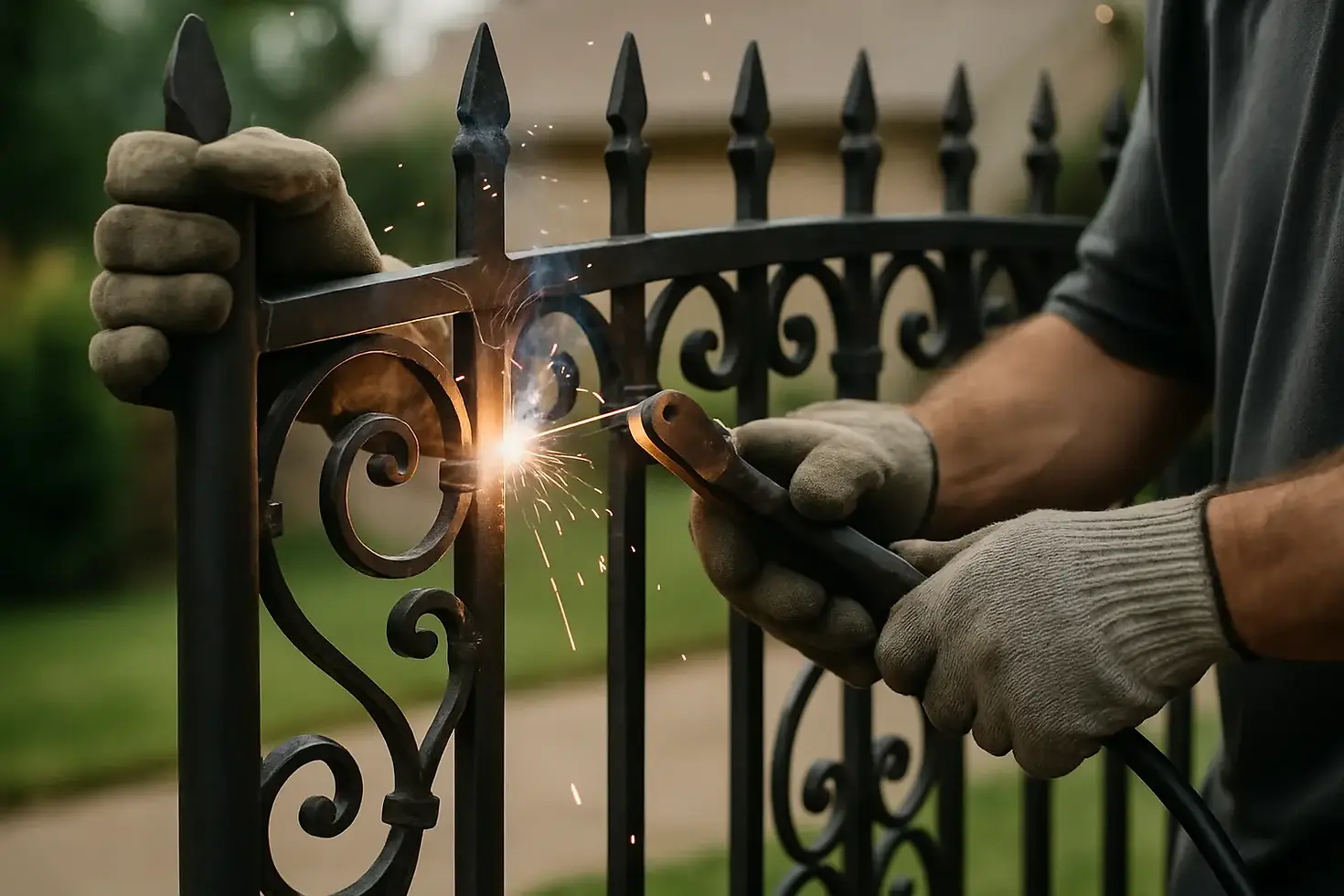
Re-welding sounds simple, but quality matters. A weld that sits on top without penetration can crack again quickly. A repair should clean the joint back to sound metal, fit the parts tight, and weld with the right process so it bonds into the base material.
Latch and strike problems
A latch that “sort of” catches is often a symptom of sagging, not the root cause. Replacing hardware without addressing alignment can leave you with a new latch that still doesn’t line up.
If alignment is good and the latch is simply worn, replacing it can be straightforward. If alignment is off, the better approach is to correct the swing first, then set the latch and strike so the gate closes with a clean, consistent pull.
What you can DIY vs. what needs a welding shop
There are a few homeowner-friendly checks that can save time and help you describe the problem accurately.
If your hinges are bolt-on and accessible, you can check for looseness, missing fasteners, or obvious movement at the post. You can also clean the latch area, verify nothing is obstructing it, and lubricate moving parts with a product made for outdoor metal hardware.
You can scrape and spot-treat light surface rust, especially on flat areas where water doesn’t pool, and you can touch up paint to keep bare metal covered.
Where DIY usually stops is anything involving structural movement, cracked welds, or rust that has gone past the coating. If you’re seeing metal separation at a joint, a hinge plate pulling away, or a frame that’s visibly out of square, you’re past paint and hardware.
Grinding and repainting over compromised metal can make a gate look better while it gets weaker. And forcing a sagging gate to latch by adjusting the strike plate can make the hinge side work even harder. That’s how minor issues become “the gate won’t open at all” issues.
How a lasting repair is approached (what to expect)
A good repair starts with diagnosis, not a guess. The gate should be checked for plumb and level at the post, and for square across the frame. You want to know if the post moved, the hinge wore, the frame racked, or corrosion reduced strength.
From there, the repair plan should focus on load paths. Gates fail where stress concentrates: hinge mounts, corners, and mid-span areas that flex. Reinforcing those points is often smarter than repeatedly adjusting the latch.
Welding repairs should be done on clean, sound metal. That means removing paint and rust back to solid steel at the weld zone, then re-coating after the repair. If the gate is galvanized, the approach changes because the coating affects welding and needs proper handling.
Finally, alignment is set with the gate moving freely. The latch should engage without lifting the gate or slamming it. A gate that closes “easy” is a gate that is not grinding itself down every day.
Repair or replace? The decision points
Not every gate is worth repairing, and not every old gate should be replaced. It depends on structure, design value, and what failed.
Repair makes sense when the gate is fundamentally solid and the failure is localized - worn hinges, cracked joints, a rusted bottom rail section, or a post that needs reinforcement. Custom gates also lean toward repair because matching the original design and fit can be more cost-effective than starting over.
Replacement starts to make more sense when rust is widespread inside tubing, when multiple joints are failing across the frame, or when the gate’s design is underbuilt for its size and use. If you’ve repaired the same problem more than once, that’s usually a sign the gate needs added bracing or a redesigned hinge and post setup, not just another patch.
A practical middle option is a rebuild: keeping the decorative face that you like while replacing the structural members that carry the load.
Preventing repeat problems after a wrought iron gate repair
After a repair, the biggest difference-maker is keeping water out of the places it likes to sit. That means maintaining paint, sealing exposed ends where appropriate, and addressing areas where debris traps moisture. If sprinklers constantly hit the gate, that constant wetting can accelerate corrosion, especially at the bottom rail.
It also helps to avoid “using the gate as a lever.” Pushing on the pickets, hanging heavy décor, or letting kids swing on it adds stress in ways the hinges were not designed for. If the gate is automatic, make sure the opener is not forcing misalignment - openers can hide a binding gate until something breaks.
And if you’re in Central Texas, keep an eye on the post. Soil movement can slowly change alignment. Catching that early can be the difference between a simple adjustment and a hinge-side structural repair.
When you need help, get it handled before it escalates
A dragging gate is more than an annoyance. It’s a wear multiplier. Each time it drags, it twists the frame, loads the hinges, and scrapes away protective coating. The fastest way to lower repair cost is to address it while the gate still swings and the metal is still thick.
If you want a repair that’s built to last and you’re near Georgetown, TriNova Custom Welding can handle wrought iron gate repair along with reinforcement, on-site welding, and custom fabrication work - details and quote requests are at https://Www.trinovawelding.com.
The best time to fix a gate is when it first starts “acting up,” because that’s when the metal is still telling you the truth - and the repair can be clean, straight, and final.


Comments