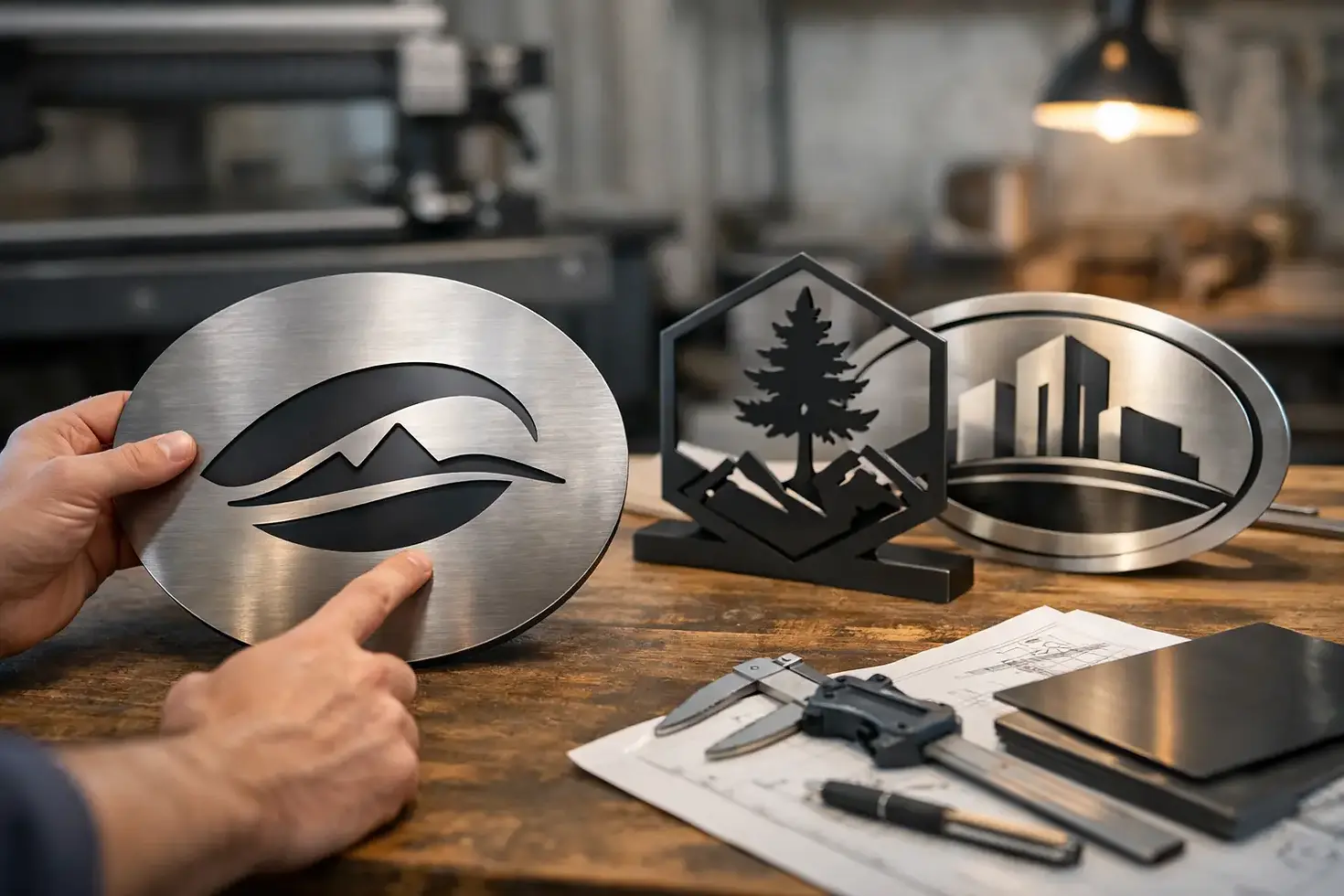
Custom Metal Business Sign Ordering Tips
- Alvaro Hernandez
- 6 days ago
- 6 min read
A good business sign has to do more than look sharp on a screen proof. It has to read clearly from the road, hold up outside, match your brand, and arrive ready to install. That is why custom metal business sign ordering goes better when you start with the real-world details first, not just the artwork.
If you are ordering a sign for a storefront, office, ranch entrance, short-term rental, or event setup, the fastest path to a good result is simple: know where it will go, how it will be mounted, and what the sign needs to do. A clean design matters, but durability, visibility, and fit matter just as much. When those pieces are handled up front, the ordering process gets easier and the finished sign works the way it should.
What custom metal business sign ordering should cover
A lot of buyers come in with a logo and a rough size in mind. That is a good start, but it usually is not enough to price and build a sign accurately. Metal signs are custom fabrication projects. The material, thickness, cut style, finish, and mounting setup all affect the final result.
For example, a small indoor logo sign for a reception area is a different job than a large outdoor sign for a gate or roadside entrance. One may prioritize clean detail and lighter weight. The other may need heavier material, a weather-ready finish, and mounting points built for wind and exposure. Both are custom signs, but they should not be ordered the same way.
That is where a fabricator with design and production experience helps. Instead of forcing your idea into a standard template, the right shop can look at your use case and guide the build around how the sign will actually be used.
Start with placement before design
The first question is not usually color or font. It is location.
Will the sign be mounted to a building face, hung on a bracket, attached to a fence or gate, or installed at a freestanding entrance? Will people see it on foot, from a parking lot, or while driving past? Those answers shape the size, spacing, and level of detail your design can support.
A sign with fine script and small cutouts may look great close up, but lose readability from the road. On the other hand, a bold, simple layout often performs better outdoors and at distance. If your sign needs to attract attention quickly, clarity beats complexity almost every time.
It also helps to think about light and weather. A shaded storefront gives you more flexibility than a west-facing exterior wall in full Texas sun. Some finishes show contrast better in bright light. Some mounting styles hold up better in exposed areas. A good order starts with those conditions, because they affect both appearance and longevity.
Size is not just about wall space
One of the most common mistakes in custom metal business sign ordering is choosing a size based only on the space available. The better approach is to choose a size based on how far away the sign needs to be read and how much information it needs to carry.
If your sign includes only a business name or logo, you can often go larger and cleaner. If it includes a tagline, address, suite number, or directional information, the layout gets tighter fast. That does not mean you cannot include those details. It means the sign may need more room, a simpler composition, or a second supporting sign for the extra information.
This is where scale matters. A design that looks balanced on a laptop screen can feel cramped once it is cut from metal. Thin lines, tight spacing, and small internal cutouts can also affect structural strength depending on the design. Sometimes the best move is not enlarging the whole sign, but simplifying the artwork so the metal cuts cleanly and reads better.
Choosing the right metal and finish
Material choice affects durability, weight, cost, and appearance. If the sign is going outdoors long term, that choice matters even more.
Steel signs offer strength and a solid, substantial feel. They are a strong fit for ranch signs, gate signs, business entry signs, and branded exterior pieces that need a bold look. Aluminum can be a good option when lower weight matters or when the mounting surface has limits. What works best depends on the use case.
Finish is just as important. Raw metal can look great in the right setting, but it is not always the right choice for long-term exposure. Powder coating and painted finishes add protection and give you more control over the final look. Matte black remains a popular choice because it is clean, readable, and fits a wide range of branding styles, but it is not the only answer. Some signs need higher contrast, while others look better with a more custom color match.
There is always a trade-off. Heavier material may feel more premium and handle exposure better, but it can cost more to ship and install. A detailed finish may look great, but if the sign is mounted far away or viewed quickly, the extra visual detail may not add much practical value.
Artwork files help, but a rough idea can still work
Not every customer has a production-ready design file. That should not stop the project.
If you already have a clean vector logo, that can speed things up. If you only have a JPEG, a sketch, a business card, or an idea of what you want, the project can still move forward. The main thing is being clear about the goal. Is the sign meant to match existing branding exactly, or is it more about creating a durable, custom piece with your business name and style?
This is also the point where honesty saves time. Some designs look good in print but do not translate well to plasma-cut metal. Thin serif fonts, overly fine details, and overlapping decorative elements may need to be adjusted. That is not a downgrade. It is part of making sure the finished sign is strong, readable, and built to last.
Do not treat mounting as an afterthought
A sign can be perfectly made and still become a headache if mounting was not discussed early.
Different install methods call for different build choices. A wall-mounted sign may need pre-drilled holes, stand-offs, or a backer. A gate sign may need tabs, brackets, or frame integration. A hanging sign may need chain points, balance, and reinforcement. If the sign is being shipped, the mounting setup should also make sense for the person receiving and installing it.
This is one reason custom ordering matters. The sign should arrive ready for the intended application, not leave you figuring out hardware and attachment points later. If your install surface is brick, wood, metal, or masonry, say that up front. It can change what is recommended.
Shipping, timing, and expectations
For many buyers, the custom part of the job is easy. The waiting is the hard part. That is why lead time should be part of the conversation from the beginning.
A custom metal sign is not an off-the-shelf product. Design approval, cutting, finishing, and packaging all take time. Complexity matters too. A single-color sign with a straightforward cut path may move faster than a multi-part design with special mounting and finish requirements.
If the sign is tied to an opening date, event, or property launch, mention that early. Sometimes there is flexibility in the design or finish that can help keep the project on schedule. Sometimes there is not. Clear expectations are better than rushed work that creates problems later.
A shop like TriNova Custom Welding is built around getting custom work done with speed and accountability, but good production still depends on good information. The more clearly the order is defined, the faster the process tends to move.
How to make custom metal business sign ordering easier
If you want a faster quote and a smoother build, come prepared with a few basics: where the sign will go, the rough size you want, whether it is indoor or outdoor, how you plan to mount it, and any artwork or examples you have. You do not need to overcomplicate it. Even a few clear photos of the install area can help a lot.
It also helps to know your priorities. Some buyers care most about matching an exact brand look. Others care most about durability, speed, or staying within a budget. There is no single right answer, but being clear about what matters most makes it easier to build the right sign the first time.
The best custom signs are not just decorative. They solve a job. They help people find your business, recognize your brand, and trust that what they see outside reflects the quality of what you do inside. When the order is built around that purpose, the finished sign tends to earn its place for years.


Comments